June 6, 2026
Restaurant Menu Pricing Strategy: How to Price for 30% Profit Margins
Your menu is a pricing engine, not a list of dishes. Learn the food cost percentage rule, the Menu Matrix framework, and the psychology tricks that push independent restaurants from 5% to 15% profit margins.
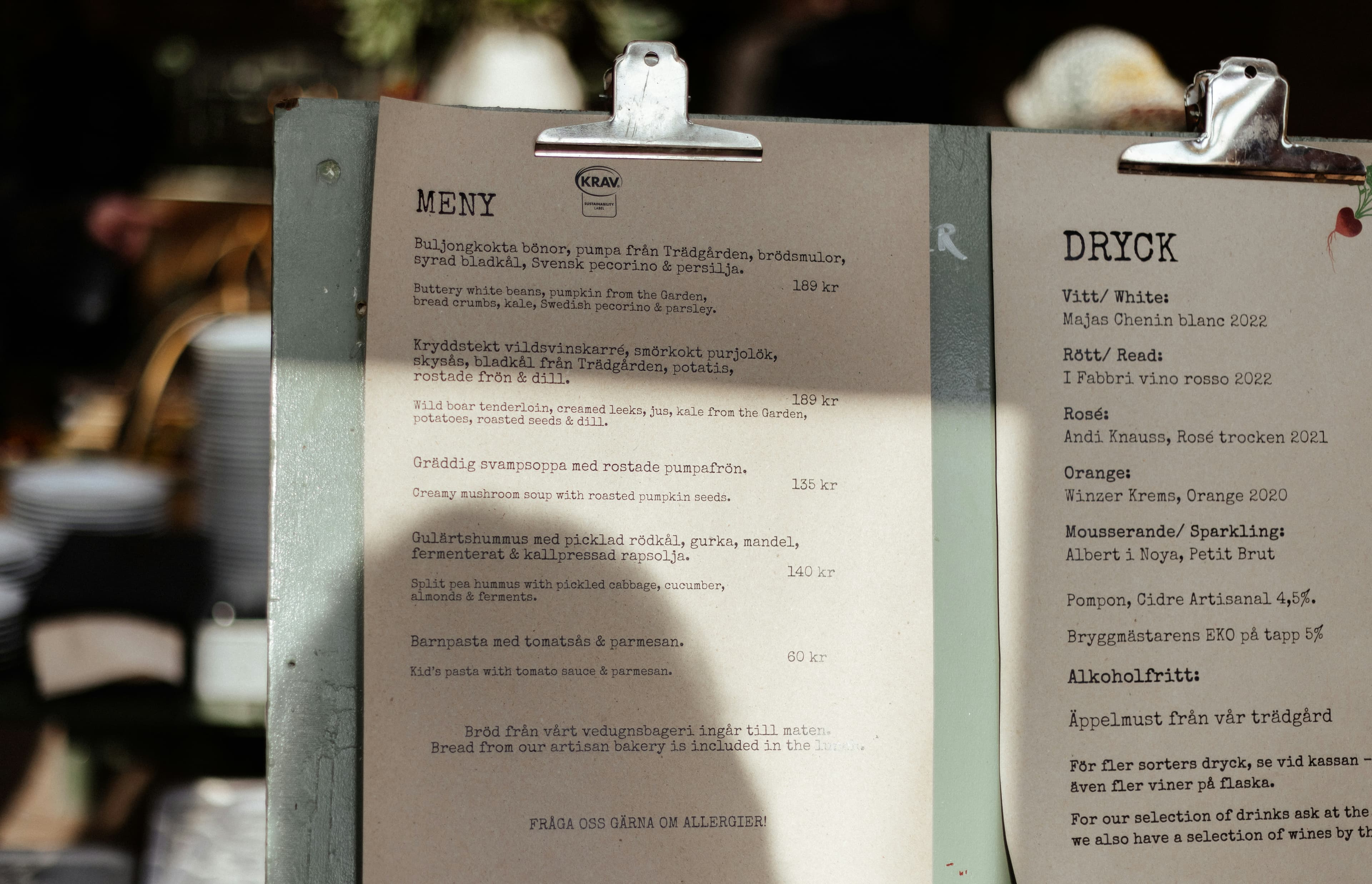
The Menu Is Your Most Powerful Profit Tool
A restaurant menu is not a list of dishes. It's a pricing engine. Every item on that page is either making you money or costing you money — and the difference between the two is rarely obvious from the dining room.
Most independent restaurant owners in the US price their menus the same way: look at what competitors charge, add a few bucks for quality, and hope the math works out. It usually doesn't. The average restaurant in America runs a 3% to 5% profit margin. A well-priced menu can push that to 10% or 15% — without adding a single customer.
The Food Cost Percentage Rule
Every menu item should be priced against its food cost percentage. The formula is simple:
💰 Menu Price = Ingredient Cost / Target Food Cost Percentage
If a burger costs you $3.80 in ingredients and you're targeting 30% food cost, the menu price should be $3.80 / 0.30 = $12.67. Round to $12.99.
Here's what target food cost percentages look like by restaurant type in the US:
- Quick Service / Fast Casual: 28% to 32%. Volume-driven, tight margins on food, make it up on beverages and turns.
- Casual Dining: 28% to 35%. Slightly higher because labor and ambiance eat into the pie. A $18 pasta dish with a 30% food cost leaves $5.40 for ingredients.
- Fine Dining: 25% to 30%. Premium ingredients cost more in absolute dollars, but the menu prices are higher, so the percentage stays low.
- Food Trucks: 25% to 30%. Lower overhead means you can afford better ingredients or lower prices.
The Menu Matrix: Stars, Plowhorses, Puzzles, and Dogs
Restaurant consultants use a framework called the Menu Matrix to categorize every dish by two factors: popularity and profitability.
- Stars — High popularity, high profit. These are your winners. Promote them. Put them at the top-left of your menu where eyes land first. Never touch their price unless costs force your hand.
- Plowhorses — High popularity, low profit. These move but don't make money. Options: raise the price slightly, reduce portion size, or swap in a cheaper side.
- Puzzles — Low popularity, high profit. Great margins but nobody orders them. The fix: rename them, reposition them on the menu, or have servers recommend them.
- Dogs — Low popularity, low profit. Cut them. Every dog on your menu is inventory risk, kitchen complexity, and a wasted line on the page.
Menu Psychology That Actually Works
- Drop the dollar sign — Studies show '$12.99' triggers 'spending money' in the brain, while '12.99' feels like a neutral number. Cornell's restaurant research lab confirmed this.
- Use a decoy — Put a $38 ribeye next to a $26 sirloin. Most won't order the ribeye, but it makes the sirloin feel reasonable. This is anchoring.
- Avoid price columns — When prices are lined up in a column, customers scan down and pick the cheapest. Scatter prices within the item description so the eye reads the food first, price second.
- The rule of three — For each category, offer three price points: value, mid-range, premium. Most customers pick the middle. Price it accordingly.
When to Revisit Your Prices
Menu pricing is not a one-and-done exercise. Recalculate quarterly, when a key ingredient spikes (chicken breast up 30% in a month? every chicken dish needs immediate recalculation), and when you change suppliers.
The 30% Target
A 30% food cost is the benchmark most US independent restaurants aim for. It leaves 70% for labor, rent, utilities, marketing, and profit. If your food cost runs at 35%, that 5% difference is coming directly out of your pocket.
On $500,000 in annual revenue, dropping food cost from 35% to 30% puts an extra $25,000 in your bank account. A food costing tool that tracks actual ingredient prices and recalculates percentages automatically is the difference between pricing your menu once and pricing it right every week. Know your numbers. Your menu is either your best salesperson or your quietest thief.