February 10, 2026
Recipe Costing Example – Pizza (Complete Breakdown)
Step-by-step recipe costing for a 14" cheese pizza. Real ingredient prices, yield calculations, and menu pricing recommendations for pizzerias.
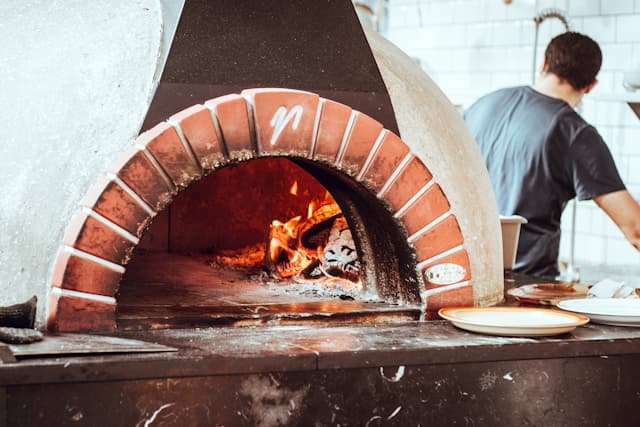
Recipe Costing Example – Pizza (Complete Breakdown)
Introduction: Why Pizza Is the Perfect Recipe Costing Example
Pizza is arguably one of the best teaching tools for understanding recipe costing in the restaurant industry. Whether you are opening a pizzeria, optimizing your existing menu, or simply learning food cost management, pizza provides an ideal case study for several reasons:
- Universal Appeal: Pizza is one of the most popular foods worldwide, making it relatable to virtually everyone in the food service industry.
- Modular Construction: Pizza breaks down cleanly into distinct components—dough, sauce, cheese, and toppings—making it easy to understand how individual ingredient costs contribute to the whole.
- Scalable Mathematics: The circular geometry of pizza (calculating area, yield per batch) introduces real-world math that applies to countless other menu items.
- Topping Economics: The difference between a cheese pizza and a loaded specialty pie demonstrates how premium ingredients affect food cost percentages and profitability.
- High-Volume Application: Pizzerias operate on thin margins with high volume, making precise costing essential for survival.
In this guide, we will walk through a complete cost breakdown of a 14" cheese pizza, including dough yield calculations, popular toppings analysis, and menu pricing strategies that can help you achieve industry-standard food cost targets.
The Base: 14" Cheese Pizza Ingredient Breakdown
Let us start with the foundation—a classic 14" cheese pizza. This is the baseline that every pizzeria builds upon, and understanding its true cost is essential before adding premium toppings.
Dough: $0.35
A 14" pizza typically uses approximately 16 ounces (1 pound) of dough. Here is how the cost breaks down for a standard pizza dough recipe at 65% hydration:
- Flour (9.6 oz at $0.45/lb): $0.27
- At 65% hydration, flour represents approximately 60% of the total dough weight
- 16 oz dough × 0.60 = 9.6 oz flour
- 9.6 oz ÷ 16 oz/lb = 0.6 lb × $0.45 = $0.27
- Water: $0.00 (negligible)
- Municipal water costs are typically less than $0.001 per pizza
- Yeast (0.12 oz): $0.03
- Active dry yeast costs approximately $0.25/oz in bulk
- Salt (0.16 oz): $0.01
- Table salt costs approximately $0.06/oz in bulk
- Oil (0.32 oz): $0.04
- Standard vegetable oil costs approximately $0.13/oz
Total Dough Cost: ~$0.35
Cheese: $0.88
Mozzarella (5 oz at $2.80/lb): $0.88
- 5 oz ÷ 16 oz/lb = 0.3125 lb
- 0.3125 lb × $2.80/lb = $0.875 ≈ $0.88
Most pizzerias use a low-moisture, part-skim mozzarella for optimal melt and cost efficiency. Whole milk mozzarella costs slightly more but offers superior flavor and browning characteristics.
Sauce: $0.24
Pizza Sauce (3 oz at $1.30/lb): $0.24
- 3 oz ÷ 16 oz/lb = 0.1875 lb
- 0.1875 lb × $1.30/lb = $0.244 ≈ $0.24
This assumes a prepared sauce made from tomato products, herbs, and seasonings. Many pizzerias make sauce in-house from canned tomatoes, which can reduce costs to $0.90-1.10/lb depending on tomato quality and season.
Base Pizza Total: $1.47
| Component | Amount | Unit Cost | Total Cost |
|---|---|---|---|
| Dough | 16 oz | $0.35/lb | $0.35 |
| Cheese | 5 oz | $2.80/lb | $0.88 |
| Sauce | 3 oz | $1.30/lb | $0.24 |
| TOTAL | — | — | $1.47 |
Understanding Dough Yield: The 65% Hydration Rule
One of the most important concepts in pizza costing is understanding baker is percentage and hydration levels. This determines how much flour you actually need to produce a given amount of dough.
What Is 65% Hydration?
Hydration percentage refers to the ratio of water to flour by weight. At 65% hydration, your recipe uses 65 grams of water (or 0.65 pounds) for every 100 grams (or 1 pound) of flour.
The Math: Why Flour Is Only ~60% of Dough Weight
Here is why this matters for costing: When flour absorbs water, the total weight increases, but the flour itself represents a smaller percentage of the final product.
For a 16 oz dough ball:
- Flour weight = Total dough weight ÷ (1 + hydration percentage)
- Flour weight = 16 oz ÷ 1.65 = 9.7 oz
- Water weight = 16 oz - 9.7 oz = 6.3 oz
- Other ingredients (salt, yeast, oil) ≈ 0.3 oz
This means flour represents approximately 60.6% of the total dough weight, not 65%. Understanding this distinction prevents overestimating flour costs.
Batch Costing Example
If you make dough in 25 lb batches:
- 25 lb dough requires approximately 15.15 lb flour (25 ÷ 1.65)
- At $0.45/lb flour = $6.82 in flour cost
- Yeast, salt, oil for batch ≈ $0.75
- Total batch cost: ~$7.57
- Yields approximately 25 (16 oz) dough balls
- Cost per dough ball: ~$0.30 (slightly less than individual calculation due to bulk efficiency)
Popular Toppings Cost Breakdown
Now let us examine how toppings affect your food costs. These prices reflect typical wholesale costs in 2024-2025:
Pepperoni
Standard portion: 2 oz (approximately 20-24 slices)
- Wholesale cost: $3.80-4.20/lb
- Cost per pizza: 2 oz ÷ 16 × $4.00 = $0.50
- Premium cupping pepperoni: $5.50-6.50/lb = $0.75 per pizza
Mushrooms
Standard portion: 2 oz (fresh, sliced)
- Wholesale cost: $2.20-2.80/lb
- Cost per pizza: 2 oz ÷ 16 × $2.50 = $0.31
- Canned mushrooms (drained): $1.80-2.20/lb = $0.25 per pizza
Green Peppers
Standard portion: 1.5 oz (fresh, sliced)
- Wholesale cost: $1.00-1.40/lb
- Cost per pizza: 1.5 oz ÷ 16 × $1.20 = $0.11
- Significant waste factor: ~30% (cores, seeds, stems)
- True cost with waste: ~$0.16 per pizza
Italian Sausage
Standard portion: 2.5 oz (raw, crumbled)
- Wholesale cost: $2.60-3.20/lb
- Cost per pizza: 2.5 oz ÷ 16 × $2.90 = $0.45
- Cooked weight loss: ~25% (water/fat renders out)
- Portion controls critical for profitability
Cost Per Slice vs. Whole Pie
Understanding slice economics is crucial for pizzerias that sell by the slice, which represents 30-50% of revenue for many operations.
14" Pizza Specifications
- Diameter: 14 inches
- Area: π × r² = 3.14 × 49 = 154 square inches
- Typical cut: 8 slices
- Slice area: 19.25 square inches
Cost Per Slice (Base Cheese Pizza)
- Whole pie cost: $1.47
- Cost per slice: $1.47 ÷ 8 = $0.18
The Slice Premium
Slice pricing typically carries a premium because:
- Labor intensity: Each slice requires individual handling, heating, and service
- Waste factor: Unsold slices at day is end represent pure loss
- Convenience value: Customers pay for immediate gratification
- Packaging: Boxes, paper, napkins add $0.10-0.15 per slice
Recommended slice pricing strategy: 2.5-3× the per-slice food cost to account for these factors.
Menu Pricing Recommendations
The 22-28% Food Cost Target
The pizza industry typically targets a food cost percentage between 22-28%. This range allows for:
- Competitive menu pricing
- Adequate gross margin to cover labor, rent, utilities
- Profitability at high volumes
Why this range works:
- Below 22%: Prices may be uncompetitive or portions too small
- Above 28%: Insufficient margin to cover operating costs
Pricing Formula
Minimum Menu Price = Food Cost ÷ Target Food Cost %
Example: Cheese Pizza at $1.47 cost
- 22% target: $6.68 minimum (typical market: $8-10)
- 25% target: $5.88 minimum (typical market: $8-10)
- 28% target: $5.25 minimum (typical market: $8-10)
Most markets support cheese pizza prices of $8-12, giving you significant cushion above your minimum price points.
Conclusion: Master Pizza Costing with FoodCosting.app
Pizza costing demonstrates the fundamental principles that apply to every item on your menu: understand your ingredient costs, calculate yields accurately, portion consistently, and price with your target food cost percentage in mind.
The difference between a profitable pizzeria and one that struggles often comes down to these details. A $0.25 difference in food cost per pizza, at 200 pizzas per day, equals $18,250 annually—enough to make or break many small operations.
Ready to take control of your recipe costing?
Visit FoodCosting.app to:
- Calculate precise recipe costs for your entire menu
- Track ingredient price fluctuations in real-time
- Generate food cost reports by category and item
- Optimize your menu for maximum profitability
- Train your staff on portion control
🍕 Stop guessing. Start profiting. Get your food costs under control today with FoodCosting.app
Note: All prices in this guide reflect approximate wholesale costs as of 2024-2025. Actual costs vary by region, supplier, and season. Always calculate costs based on your specific ingredient invoices and portion standards.