Recipe Costing Example – Coffee (Café Breakdown)
Complete recipe costing for café drinks. Real costs for lattes, espresso, and cold brew, plus menu pricing strategies for coffee shops.
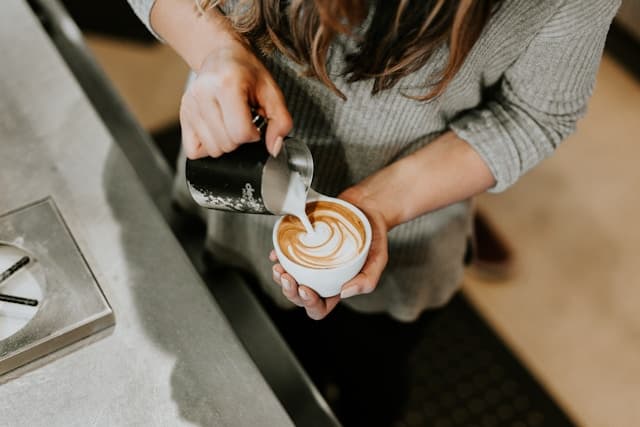
Coffee is arguably one of the best examples for learning recipe costing, and yet it's often misunderstood by café owners and baristas alike. Unlike complex multi-ingredient dishes, a cup of coffee is deceptively simple: just beans and water at its core. But this simplicity makes it the perfect teaching tool for understanding food cost percentages, yield calculations, and menu pricing strategy.
What makes coffee particularly interesting is the massive gap between perceived value and actual cost. A $5 latte might cost only $0.90 to produce, representing an 18% food cost ratio, far better than the industry-standard 28-35% target for restaurants. Yet many café owners struggle to turn a profit because they don't fully account for all cost components or understand where their real margins come from.
This guide will walk you through a complete cost breakdown of café beverages, from the espresso shot to the final menu price. Whether you're opening a new coffee shop or optimizing an existing operation, understanding these numbers is essential for sustainable profitability.
The Anatomy of a 12oz Latte: Complete Cost Breakdown
Let's start with the most popular espresso-based drink: the 12oz latte. This breakdown includes every component that goes into the cup.
Component Cost Table
| Component | Amount | Cost Range | Notes |
|---|---|---|---|
| Espresso Shot | 18g coffee | $0.35 - $0.50 | Depends on bean tier |
| Milk | 8oz (227ml) | $0.20 - $0.30 | Whole milk baseline |
| Cup, Lid & Sleeve | 1 set | $0.10 - $0.15 | Compostable +30-50% |
| Syrup (optional) | 0.5oz | $0.15 - $0.25 | Vanilla, caramel flavors |
| Total Base Cost | - | $0.80 - $1.20 | Without syrup: $0.65-0.95 |
Understanding Each Component
Espresso Shot (18g coffee): An industry-standard double shot uses 18-20g of ground coffee. The cost varies dramatically based on bean quality, commodity-grade at $0.35/shot vs specialty-grade at $0.50+/shot.
Milk (8oz steamed): The 12oz latte contains approximately 2oz espresso and 8oz steamed milk (with 2oz foam). Milk is your second-largest cost component after coffee beans.
Packaging ($0.10-0.15): Don't underestimate packaging costs. A quality to-go cup with lid and sleeve adds up quickly, especially with rising demand for compostable alternatives.
Coffee Bean Pricing Tiers: From Commodity to Specialty
Understanding coffee bean pricing is crucial for accurate recipe costing. Coffee operates on a three-tier system:
Pricing Tier Comparison
| Tier | Price per lb | Cost per 18g Shot | Characteristics |
|---|---|---|---|
| Commodity | $4 - $6 | $0.15 - $0.24 | Supermarket blends, inconsistent quality |
| Premium | $8 - $12 | $0.32 - $0.47 | Branded commercial roasters |
| Specialty | $14 - $25+ | $0.55 - $1.00 | Single-origin, micro-lots, direct trade |
The Hidden Cost: Waste and Dialing In
Here's what many café owners miss: you don't just pay for the beans that make it into the cup. You pay for:
- Dialing in: Baristas waste 2-4 shots when calibrating equipment
- Grinder retention: 1-2g of coffee sits in the grinder chamber
- End-of-day waste: Ground coffee that doesn't get used
- Spillage: Natural waste during busy periods
💡 Rule of thumb: Add 10-15% to your calculated coffee costs to account for waste.
Milk Cost Variations: Dairy and Alternatives
Milk costs have become increasingly complex with the rise of alternative milks. Here's the breakdown:
Milk Cost Comparison (per 8oz serving)
| Milk Type | Cost per 8oz | Premium vs Whole | Notes |
|---|---|---|---|
| Whole Milk | $0.20 – $0.25 | Baseline | Standard for latte art |
| 2% Milk | $0.18 – $0.23 | -5% | Slightly cheaper |
| Oat Milk | $0.35 – $0.50 | +60-100% | Most popular; steams well |
| Almond Milk | $0.30 – $0.40 | +40-60% | Lower calorie |
The Upcharge Reality
Most cafés charge $0.50-$1.00 extra for alternative milks. Let's see if that covers the cost:
Key insight: Alternative milk upcharges are highly profitable, but only if customers actually order them. Don't base your business model on assumptions.
Yield: Understanding Espresso Extraction Ratios
Espresso yield is the foundation of coffee costing. Get this wrong, and your entire pricing model fails.
The Golden Ratio: 1:2 Input to Output
Modern specialty coffee uses a 1:2 ratio (also called 50% extraction):
- Input: 18g ground coffee
- Output: 36g espresso (approximately 36ml)
| Dose (Input) | Yield (Output) | Ratio | Use Case |
|---|---|---|---|
| 18g | 36g | 1:2 | Standard double shot |
| 20g | 40g | 1:2 | Triple shot |
Why This Matters for Costing
Standardize your recipes. Every 1g variance in output affects your cost per drink by approximately 3%.
Cost Comparison: Espresso vs Drip vs Cold Brew
Per-Serving Cost Comparison
| Type | Dose | Yield | Coffee Cost | Total Cost | Menu Price | Food Cost % |
|---|---|---|---|---|---|---|
| Espresso | 18g | 2oz | $0.45 | $0.55 | $3.00 | 18% |
| Cold Brew | 50g | 16oz | $1.25 | $1.45 | $4.50 | 32% |
Menu Pricing Strategy: The 15-20% Food Cost Target
Menu Price = Ingredient Cost ÷ Target Food Cost %
Example: If your latte costs $0.95 to make and you want an 18% food cost, the menu price should be $5.28.
The Real Profit is in Add-Ons
Here's the secret that successful café owners know: the base drink isn't where you make money, it's the modifications.
Add-On Profit Analysis
| Add-On | Additional Cost | Typical Upcharge | Margin |
|---|---|---|---|
| Extra shot | $0.25 | $1.00 | 75% |
| Flavor syrup | $0.20 | $0.50 | 60% |
Practical Implementation: Your Coffee Costing Checklist
Weekly Cost Tracking
- Weigh your waste: Track how much coffee goes unused each day
- Monitor milk usage: Compare purchased vs. theoretical usage
Conclusion: Master Coffee Costs, Build a Sustainable Café
Whether you're running a single-location café or scaling to multiple shops, precise recipe costing is the foundation of profitability. Start with coffee-the simplest, highest-margin menu category, and apply these principles across your entire operation.
💡 Take Your Food Costing to the Next Level with FoodCosting.app
Stop guessing. Start knowing exactly what every drink on your menu costs to produce.