February 19, 2026
The Complete Menu Pricing Formula Guide for Restaurants
Learn the exact formulas restaurants use to price menus profitably. Food cost percentage, markup multipliers, prime cost methods, and psychological pricing strategies explained with real examples.
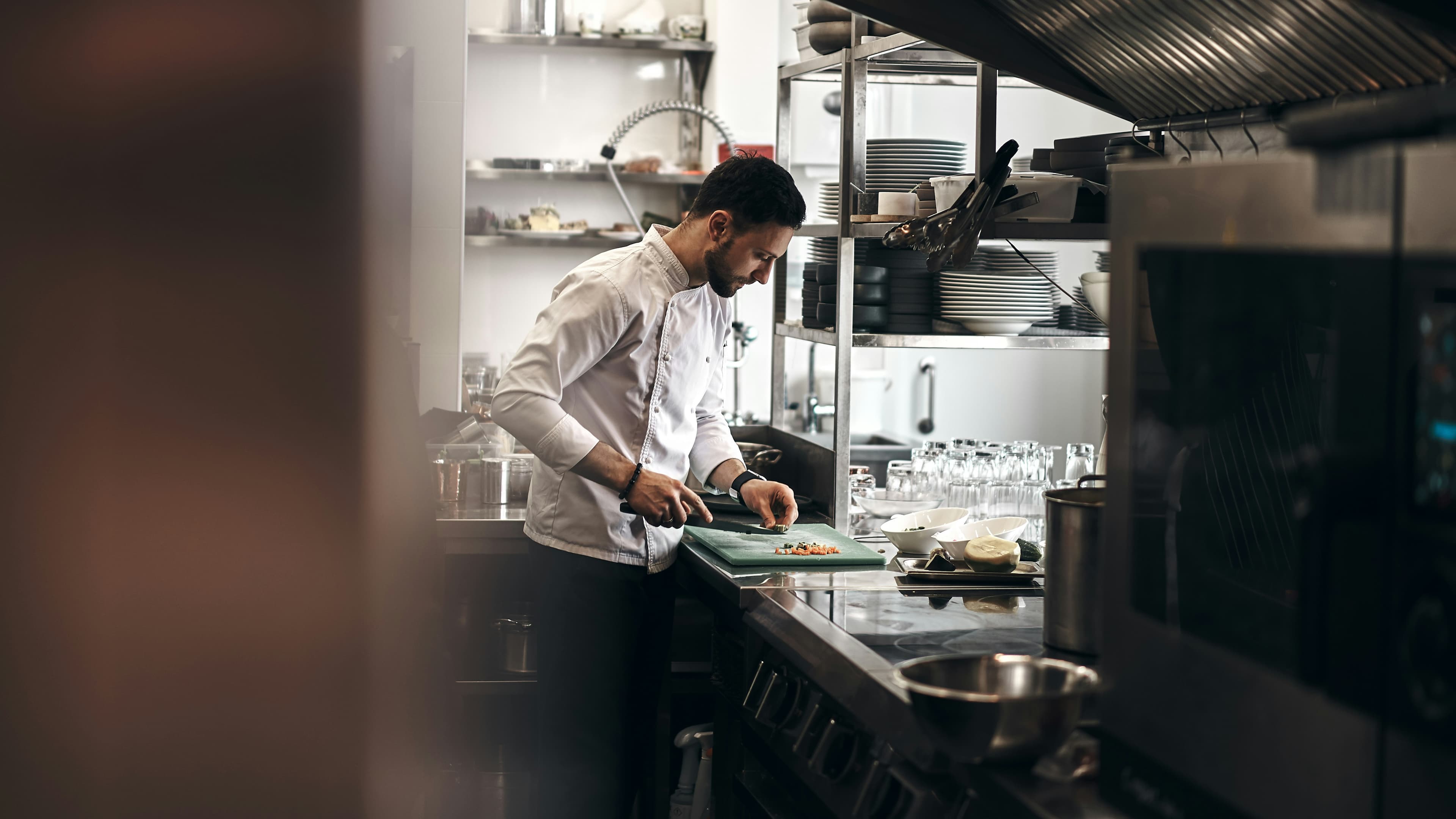
Menu pricing isn't guesswork—it's math with a dash of psychology. Get it right, and you build a profitable, sustainable restaurant. Get it wrong, and you'll wonder why you're working 60-hour weeks just to break even.
This guide breaks down the exact formulas successful restaurants use to price their menus. No fluff, no complicated spreadsheets—just practical methods you can apply today.
Why Menu Pricing Is Your Most Important Decision
The average restaurant profit margin is just 3-5%. That means for every $100 in sales, you're keeping $3-5. High-performing restaurants hit 10-15%, but they're the exception, not the rule. The difference? Pricing strategy.
Your menu price directly impacts three critical areas:
- Profitability: Every dollar you don't charge is profit you never see
- Perception: Prices signal quality, value, and positioning
- Sustainability: Underpricing is the fastest way to burn out
Formula 1: Food Cost Percentage Method
This is the industry standard for a reason. It's simple, reliable, and works across all restaurant types.
Menu Price = Food Cost ÷ Target Food Cost %
Example: Your burger costs $3.00 in ingredients. Your target food cost is 30%.
$3.00 ÷ 0.30 = $10.00 menu price
This means 30% of every sale covers ingredients, leaving 70% for labor, rent, utilities, and profit.
Target Food Costs by Restaurant Type
Your target depends on your concept:
| Restaurant Type | Target Food Cost % | Price Multiplier |
|---|---|---|
| Fine Dining | 28-35% | 2.9x - 3.6x |
| Casual Dining | 28-32% | 3.1x - 3.6x |
| Quick Service (QSR) | 25-32% | 3.1x - 4.0x |
| Pizzeria | 22-28% | 3.6x - 4.5x |
| Coffee Shop/Café | 20-25% | 4.0x - 5.0x |
| Bar/Pub | 25-30% | 3.3x - 4.0x |
| Buffet | 35-45% | 2.2x - 2.9x |
Formula 2: Markup Multiplier Method
Some operators prefer thinking in multiples. If your target is 30% food cost, that's roughly a 3.3x markup on ingredient costs.
Menu Price = Food Cost × Markup Multiplier
Same $3.00 burger at 3.3x markup: $3.00 × 3.3 = $9.90 (round to $10)
Formula 3: Prime Cost Method
For a more complete picture, include direct labor costs (prep and cooking time). Prime cost = food cost + direct labor.
Menu Price = (Food Cost + Labor Cost) ÷ Target Prime Cost %
Example: $4.50 food cost + $2.00 labor = $6.50 total. Target prime cost is 60%.
$6.50 ÷ 0.60 = $10.83 menu price
The Psychology of Menu Pricing
Once you've calculated your base price, how you present it matters just as much as the number itself.
Charm Pricing: The .95 Effect
Prices ending in .95 or .99 signal value. Studies show customers perceive $14.95 as significantly cheaper than $15.00, even though the difference is just five cents. This works best for casual dining and value-focused concepts.
Premium Pricing: Round Numbers
For fine dining, round numbers ($16, $24) signal quality and simplicity. They suggest confidence in your product and reduce price haggling in the customer's mind.
Anchor Pricing
Place your most expensive item prominently. A $45 steak makes your $28 pasta seem reasonable. Most customers won't order the anchor, but it reshapes their perception of everything else.
Menu Engineering: Beyond the Formula
Not every item should have the same markup. Menu engineering categorizes dishes by profit and popularity to guide your strategy.
| Category | Characteristics | Strategy |
|---|---|---|
| Stars | High profit, high popularity | Keep prominent, promote heavily |
| Plow Horses | Low profit, high popularity | Raise prices or reduce portions |
| Puzzles | High profit, low popularity | Reposition, rename, promote |
| Dogs | Low profit, low popularity | Remove or re-engineer |
5 Pricing Mistakes That Kill Profits
- Underpricing to compete: Racing to the bottom destroys margins for everyone. Focus on value, not price wars.
- Ignoring hidden costs: Packaging, garnishes, condiments, and waste add up. Factor them in from the start.
- Static pricing: Food costs change. Inflation happens. Review prices quarterly, not annually.
- Same markup everywhere: High-volume items can have lower margins. Signature dishes can command premiums.
- Not accounting for waste: If 10% of your produce spoils, your actual food cost is 10% higher than calculated.
Real-World Examples
Example 1: Gourmet Burger
- Beef patty: $2.00
- Bun: $0.30
- Toppings: $0.50
- Condiments: $0.20
- Total food cost: $3.00
- Target (28%): $3.00 ÷ 0.28 = $10.71 → Price at $10.95
Example 2: Pasta with Protein
- Pasta: $0.80
- Sauce: $1.20
- Chicken: $2.50
- Garnish: $0.50
- Total food cost: $5.00
- Target (25%): $5.00 ÷ 0.25 = $20.00
When and How to Raise Prices
Food prices increased 5-8% in 2024. Labor costs rise 4-6% annually. If you haven't adjusted prices recently, you're making less money than you were last year.
Signs it's time to raise prices:
- Your food cost percentage is creeping above target
- Supplier costs have increased 3% or more
- You're working harder for the same (or less) profit
- Quarterly reviews show consistent margin compression
How to do it without losing customers:
- Small increments (3-5%) are rarely noticed
- Time with new menu launches or seasonal changes
- Reduce portions slightly instead of raising prices (if appropriate)
- Add perceived value (better presentation, new sides)
Key Takeaways
- Start with food cost percentage: It's the industry standard for a reason
- Know your benchmarks: Different concepts have different targets
- Use psychological pricing: Charm pricing (.95) vs. premium pricing (round numbers)
- Engineer your menu: Not all items need the same margin
- Review quarterly: Costs change. Your prices should too.
- Track everything: You can't optimize what you don't measure
The right menu pricing formula isn't just about covering costs—it's about building a restaurant that can survive tough months, reward your team fairly, and give you the profit you deserve for the risk you're taking.
Use FoodCosting.app to calculate your exact food costs, track recipe profitability, and ensure every menu item hits your target margins.